

How New Sealing Tech Will Impact Engine Head Gasket 2026
- Trends Reshaping Engine Sealing by 2026
- Why Engine Head Gasket performance matters now
- Material innovations for the Engine Head Gasket
- Manufacturing & testing advances that improve reliability of Engine Head Gasket
- How coatings and surface engineering change installation and warranty for Engine Head Gasket
- Impact of powertrain trends on Engine Head Gasket demand
- Serviceability and aftermarket implications for Engine Head Gasket
- Supply chain, cost and OEM sourcing trends for Engine Head Gasket
- WTA Gasket: Capabilities and how we address future Engine Head Gasket needs
- Technology comparison: Which Engine Head Gasket is right for your application?
- Recommendations for OEMs, remanufacturers and fleet managers
- FAQ — Engine Head Gasket in 2026
- 1. Will MLS replace all other head gasket types by 2026?
- 2. How do coatings change head gasket installation requirements?
- 3. Are new gaskets more expensive — is it worth it?
- 4. What should repair shops change now to be ready?
- 5. How will electrification affect gasket demand?
- Contact & product next steps
- References
Trends Reshaping Engine Sealing by 2026
Why Engine Head Gasket performance matters now
The engine head gasket remains a critical single point of failure in internal combustion engines: it seals combustion pressure, coolant and oil passages, and maintains engine mechanical integrity. Improvements in engine thermal loads, higher cylinder pressures from downsizing and boosted engines, tighter emission targets, and longer service intervals all increase demands on the engine head gasket. For purchasing, maintenance, and design teams, the central question is how new sealing technologies will alter gasket selection, lifecycle costs and repair practices by 2026.
Material innovations for the Engine Head Gasket
Material science is the front line of progress. Four families of solutions are advancing in parallel and will dominate engineering decisions by 2026: multilayer steel (MLS), composite/graphite, advanced elastomeric seals, and surface/coating technologies (metallic and polymeric coatings). Each addresses a specific failure mode—blowout resistance, thermal stability, chemical compatibility, and micro-leakage.
Key trends to note:
- MLS designs continue to evolve with improved spring steel profiles, corrugation geometry and bead sealing to meet higher combustion pressures.
- Graphite and composite gaskets benefit from optimized binders and high-temperature adhesives that retain sealing force at elevated temperatures and longer intervals.
- Surface coatings (e.g., plasma-sprayed metals, nickel/bronze flash, advanced polymers) reduce micro-porosity and improve wet sealing with lower torque requirements.
- Hybrid concepts—combining MLS for combustion sealing with graphite rings for fluid sealing—are becoming standard in high-performance applications.
Manufacturing & testing advances that improve reliability of Engine Head Gasket
Manufacturing precision and test capability determine whether a given sealing concept will deliver in service. By 2026, greater automation, laser cutting, CNC corrugation forming, and inline quality inspection (vision systems, force mapping) reduce variability. On the testing side, accelerated thermal-mechanical-fatigue (TMF) rigs, micro-leak detection (helium or tracer gas), and computational sealing models (FEA coupled with contact mechanics) allow engineers to validate designs faster and with fewer prototypes.
Practically, this means suppliers can guarantee narrower tolerances on clamping height, bead heights and compression sets—reducing run-to-run failures and making aftermarket replacements more predictable.
How coatings and surface engineering change installation and warranty for Engine Head Gasket
Modern coatings modify the interface behavior between head and block, allowing reliable sealing with lower clamp loads and more forgiving torque procedures. Benefits include:
- Reduced need for torque re-tightening or special installation procedures.
- Improved sealing on imperfect or lightly corroded surfaces, lowering the need for resurfacing during repair.
- Longer leak-free lifetimes in mixed-construction heads (e.g., aluminum head + cast iron block).
For warranty managers this translates to fewer false-positive failures and reduced R&R costs; for service garages it can reduce labor time and parts rejection rates.
Impact of powertrain trends on Engine Head Gasket demand
Powertrain trends—electrification, downsizing/turbocharging, and mild-hybrid adoption—reshape the volume and performance profile of head gaskets:
- Less full electrification in heavy-duty and off-highway segments means demand for high-performance gaskets persists through 2026.
- Downsized turbocharged engines increase cylinder pressures and thermal gradients; gaskets must resist higher mechanical loading and more severe heat cycling.
- Extended oil and coolant service intervals (for fuel economy and emissions) increase the time gaskets are exposed to degraded fluids—requiring chemical-resistant materials.
OEM procurement teams should therefore specify gaskets not only for initial OEM fitment but also for lifecycle exposure scenarios.
Serviceability and aftermarket implications for Engine Head Gasket
The new sealing tech reduces some repair pain points while introducing others. Coated gaskets and MLS designs reduce the need for head resurfacing but can make it harder to diagnose marginal seal issues when symptoms are subtle (slow coolant loss, low-level combustion gas leakage). For the aftermarket and remanufacturers, this means:
- More rigorous surface inspection protocols at teardown, including flatness measurement and surface roughness assessment.
- Higher-quality reman gaskets (MLS or coated) commanding a High Quality but reducing rework in warranty claims.
- Training and calibration of shop torque tools and procedures to match OEM-specified clamp sequences and torque-angle methods.
Supply chain, cost and OEM sourcing trends for Engine Head Gasket
Adoption of advanced materials increases unit cost but reduces lifecycle warranty and replacement costs. Two procurement patterns are emerging:
- Vertical integration or close supplier partnerships for critical sealing tech (custom MLS designs, exclusive coatings) to protect NVH and emissions targets.
- Standardization of a limited family of gasket designs across engine platforms to gain volume economies despite material complexity.
Fleet operators and remanufacturers should evaluate total cost of ownership (TCO) rather than sticker price when comparing gasket options.
WTA Gasket: Capabilities and how we address future Engine Head Gasket needs
WTA Gasket was founded in 2012 and specializes in producing cylinder head gaskets, overhaul repair kits, and other precision components for automotive. Since the foundation, our company has always been in pursuit of the best cost performance and exceeding customer expectations as our objective. We specialize in producing automotive engine seals and gaskets. We mainly produce automotive engine sealing. Our company can design, test, and manufacture all kinds of structure and material precise gaskets, such as compound graphite gaskets, non-compound graphite gaskets, asbestos gaskets, multilayer metal, etc. Up to now, our factory can produce various overhaul repair kits, cylinder head gaskets, valve cover gaskets, oil pan intake/exhaust manifold gaskets, and other kinds of engine sealing, including Toyota, Nissan, Mitsubishi, Honda, Mazda, Isuzu, Kia, Daewoo, Volkswagen, Cetrion, Ford, GM-Buick, Chery, Hino, BMW, Chevrolet, etc. series.
WTA’s strengths in the context of 2026 sealing needs:
- Design capability: in-house R&D for MLS and composite solutions enabling bespoke sealing for boosted engines.
- Materials breadth: capacity to produce graphite, non-graphite, asbestos alternatives, and multilayer metal gaskets covering passenger cars to commercial powertrains.
- Testing & quality: integrated testing protocols (flatness, compression set, micro-leak testing) and process controls to meet OEM tolerances.
- Product range: overhaul kits and OEM-equivalent cylinder head gaskets for global vehicle platforms minimize logistics complexity for global customers.
These capabilities make WTA competitive where high-sealing performance, manufacturing consistency and broad application coverage are required.
Technology comparison: Which Engine Head Gasket is right for your application?
| Technology | Strengths | Limitations | Best use cases |
|---|---|---|---|
| Multilayer Steel (MLS) | High combustion sealing, durable under high clamp loads, good for aluminum heads | Sensitive to improper installation torque; higher manufacturing cost | Turbocharged, high-performance, modern OEM engines |
| Graphite/Composite | Conformable to surface defects, good fluid sealing, lower clamp-force requirement | Can creep over time under high temps if binder not optimized | Older designs, repairs where head resurfacing is limited |
| Coated/Hybrid | Improved micro-sealing, reduced need for surface prep, lower torque variability | Coating damage during handling; needs controlled manufacturing | OEMs seeking improved assembly robustness and longer warranty life |
| Elastomeric & O-ring | Excellent fluid sealing in targeted applications, low cost for specific ports | Not suitable for primary combustion sealing in high-pressure cylinders | Valve cover, oil pan, intake/exhaust manifolds |
Recommendations for OEMs, remanufacturers and fleet managers
Actionable steps to prepare for 2026 sealing demands:
- Specify lifecycle scenarios (temperature cycles, fluid chemistry, torque retention) in procurement contracts rather than only material families.
- Invest in surface inspection tools at service centers—flatness gauges and surface roughness measurement reduce incorrect gasket rejections.
- Require torque-angle installation procedures and calibrated tools for MLS gaskets to prevent clamp-load variability.
- Work with suppliers offering validated coated or hybrid gaskets when refurbishment volume is low and resurfacing costs are high.
- Use TCO modeling (parts + labor + downtime + warranty risk) to select gasket solutions rather than unit price alone.
FAQ — Engine Head Gasket in 2026
1. Will MLS replace all other head gasket types by 2026?
No. MLS will dominate in modern OEM turbocharged and aluminum-head engines due to high-pressure sealing performance, but composite/graphite and coated hybrids will remain important in repairs, older platforms and applications where conformability to imperfect surfaces is vital.
2. How do coatings change head gasket installation requirements?
Coatings can reduce the sensitivity to minor surface defects and lower required clamp loads, but correct torque sequences and calibrated tools still matter. Coated gaskets may reduce the need for head resurfacing in borderline cases.
3. Are new gaskets more expensive — is it worth it?
Unit cost typically rises with advanced MLS and coated designs, but total cost of ownership falls when they reduce warranty claims, decrease rework, and extend service life. Conduct a TCO analysis for your fleet or production run.
4. What should repair shops change now to be ready?
Adopt flatness and surface roughness checks, ensure torque tools are calibrated for torque-angle procedures, stock higher-quality OEM-equivalent gaskets (MLS/coated) for common platforms, and train technicians on material-specific handling to avoid coating damage.
5. How will electrification affect gasket demand?
Full BEV adoption reduces head gasket volumes where internal combustion engines are retired. However, hybridization and slower turnover in heavy-duty and off-highway sectors mean high-performance gaskets will remain necessary through 2026 and beyond.
Contact & product next steps
If you would like product samples, technical datasheets or application-specific recommendations, contact WTA Gasket sales and engineering. We provide tailored engine head gasket solutions, overhaul repair kits, and OEM-equivalent products to support fleet managers, remanufacturers and OEM sourcing teams. Visit our product catalog or request a test sample to validate fit, coating compatibility and torque procedures.
References
- Grand View Research — Automotive Gaskets Market Size, Share & Trends Analysis. https://www.grandviewresearch.com/industry-analysis/automotive-gaskets-market (accessed 2025-11-01).
- SAE International — Technical papers on cylinder head gasket design and failure modes. https://www.sae.org/ (search: head gasket) (accessed 2025-10-20).
- S&P Global (formerly IHS Markit) — Global automotive production and powertrain forecasts. https://www.spglobal.com/ (accessed 2025-09-30).
- Tribology and Materials journals — reviews on MLS and composite gasket materials (example literature reviews on multilayer steel behavior under thermal-mechanical cycling). Representative journals: Tribology International; Journal of Materials Engineering. (accessed 2025-10-15).
- Industry whitepapers from major suppliers on coating and surface treatments for gaskets (supplier technical briefs). Example: supplier technical pages and datasheets (accessed 2025-10-25).
How to Choose Right cylinder head cover gasket bmw manufacturer and supplier in US?
Top toyota 3rz gasket Manufacturers and Suppliers
Tips for Wholesale Engine Overhaul Gaskets
Wholesale Cylinder head gasket manufacturer and supplier in China
OEM&ODM
Can you produce according to the samples?
Yes, we can produce by your samples or technical drawings. We can build the molds and fixtures.
What is your terms of payment?
T/T 30% as deposit, and 70% before delivery. We'll show you the photos of the products and packages before you pay the balance.
What is your sample policy?
We can supply the sample if we have ready parts in stock, but the customers have to pay the sample cost and the courier cost.
How do you make our business long-term and good relationship?
1. We keep good quality and competitive price to ensure our customers benefit,
2. We respect every customer as our friend and we sincerely do business and make friends with them. no matter where they come from.
What is your terms of packing?
Generally, we pack our goods in WTA and SOYI packing. If you have legally registered patent, we can pack the goods in your branded boxes after getting your authorization letters.
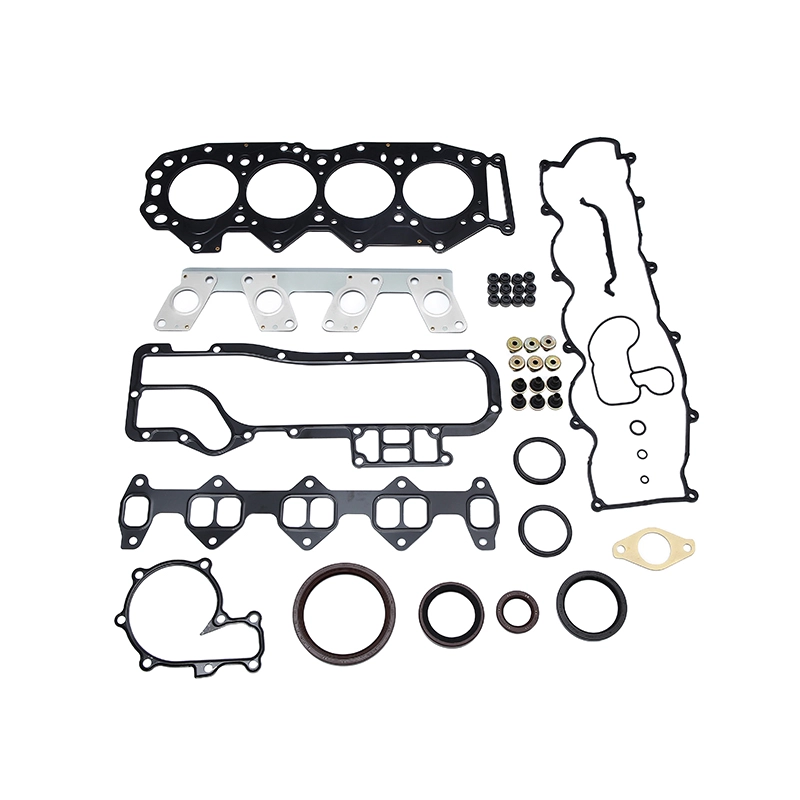
High Quality Full Gasket Set 8ASX-10-271 WL Engine Overhaul Gasket Kits for Mazda B-SERIE 2.5
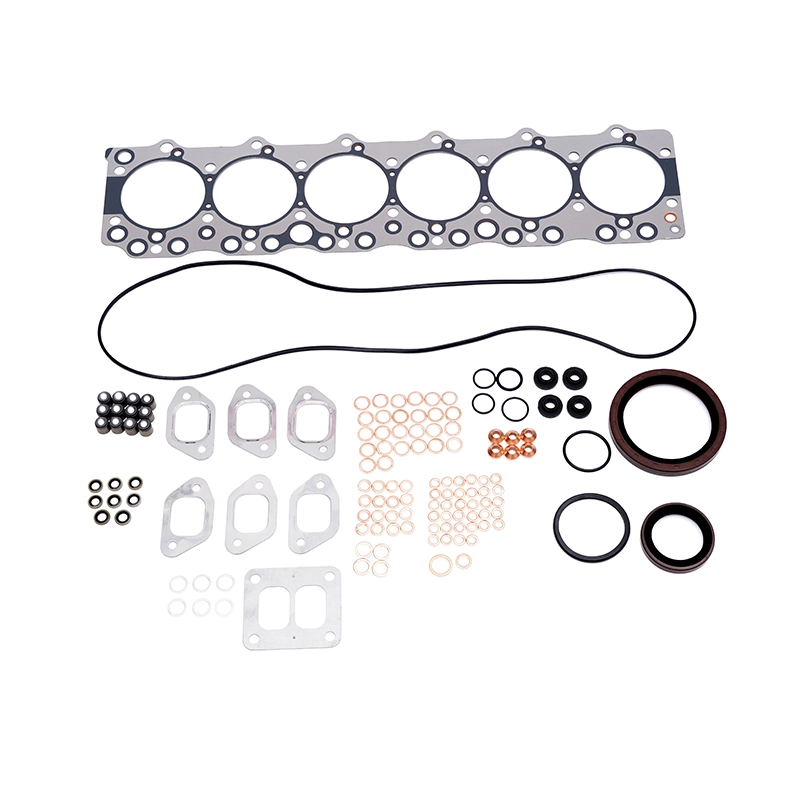
For ISUZU 6BG1 Truck Fit 1986-1992 F-Series FSR 500 FVR 12 JCS 420 1-87810609-0 Engine Head Gasket Kit Full Set 1878106090
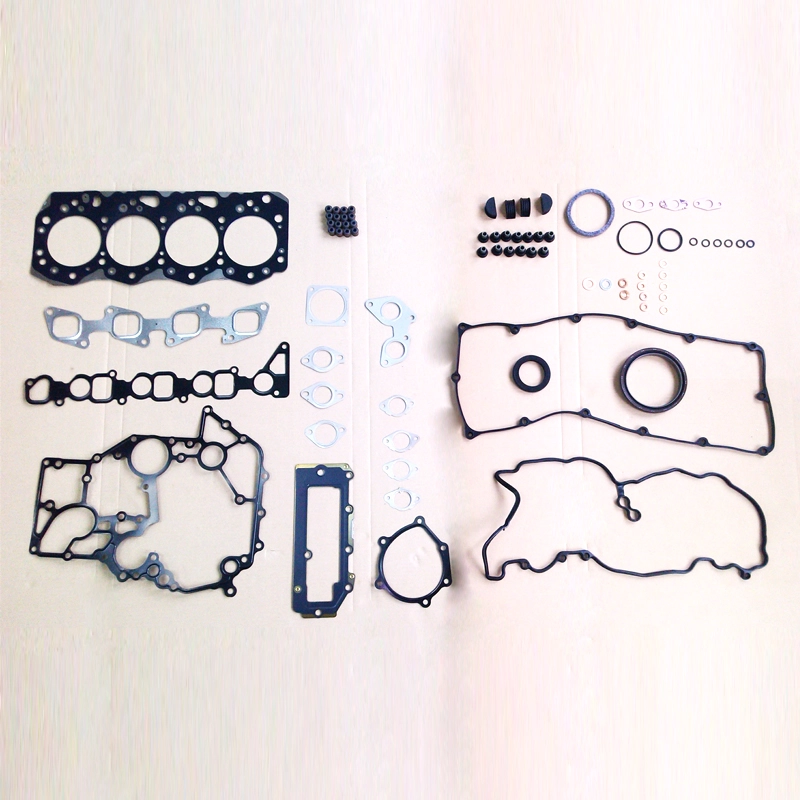
OEM 5-87815243-0 Cylinder Head Gasket ISUZU 4JJ1 4JJ1-TC 4JJ1-TCX 4JK1-TC 4JK1-TCX
 High Quality
 7/24 Service
 Guaranteed Warranty
 Scan QR Code
Tik Tok
YouTube
Facebook
LinkedIn
Scan QR Code
Whatsapp: +8618922275934
Whatsapp: +8618922276204
Whatsapp: +8618922271543